Jaipur – The Pink City of India: A Royal Ride of History, Culture and Heritage
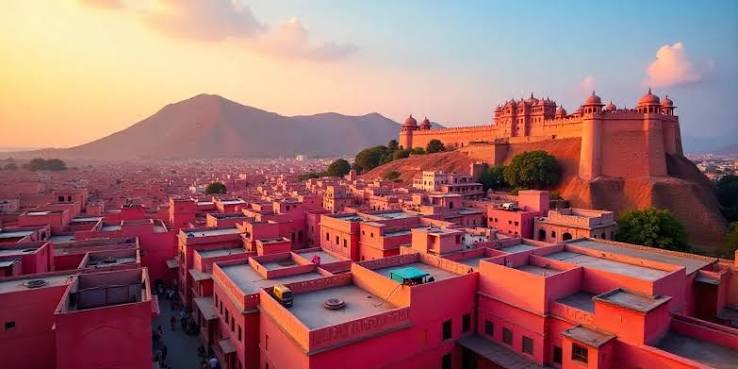
Think about strolling through alleys lined with pink-hued buildings, majestic palaces that tell stories of kings and queens, vibrant bazaars that come alive with colors, and every nook and cranny echoing the tales of royalty. Welcome to Jaipur, the Pink City of India, where history, architecture, culture and modern life mix together in wonderful ways.
Whether you are a history buff, a traveler, a photographer or a person who loves to explore the rich heritage of India, Jaipur promises to offer you an experience of a lifetime. Jaipur, the capital of Rajasthan, is not merely a city but a living museum of the grandeur of the Rajput era and the comforts of the modern world.
Why is Jaipur known as the Pink City?
The term “Pink City” was coined after an event in 1876.When the Prince of Wales, Albert Edward (later King Edward VII) was planning to visit Jaipur, the city’s monarch Maharaja Sawai Ram Singh II wanted to give the royal guest a pleasant and memorable welcome.
At that time pink was the colour of hospitality and kindness. The Maharaja therefore had the structures inside the walled city painted terracotta pink. The Prince was so captivated with the sight that Jaipur became famous all over the world as the Pink City.
Jaipur was founded in 1727 by Maharaja Sawai Jai Singh II, king of Amber.Earlier to Jaipur the capital of the kingdom was Amber (Amer). However with the population growing and paucity of water the Maharaja took a decision to start a planned metropolis.Unlike many medieval Indian cities, which developed spontaneously, Jaipur was meticulously planned according to the principles of Vastu Shastra and traditional Indian architecture.
The city is laid out in a grid pattern and is one of the earliest planned cities of India.Jaipur India’s First Planned CityOne of the outstanding triumphs of Jaipur is its wonderful urban planning.It was designed by Vidyadhar Bhattacharya, a Bengali architect and academic.He laid out Jaipur into nine rectangular sectors based on old Hindu architectural ideas.Jaipur was a city which was centuries ahead of time with wide roadways, organized markets, drainage systems, residential zones and public squares.
Even today, urban planners respect Jaipur’s smart city design.
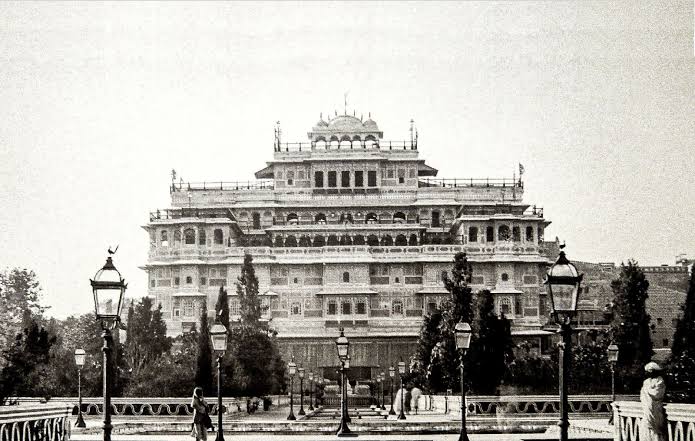
Royal Heritage of Jaipur
- Jaipur has traditionally been connected with the Rajput monarchs, especially the Kachwaha dynasty.
- The emperors made Jaipur a centre for :
- Art Literature Astronomy Architecture Commerce Culture
- The towering monuments of the city remain to this day a testament to their force and vision.
- Hawa Mahal – The Palace of Winds.
- The most famous monument in Jaipur is the Hawa Mahal (Palace of Winds), erected in 1799 by Maharaja Sawai Pratap Singh.
- The five-story palace contains 953 elegantly fashioned windows called jharokhas.
- The windows enabled royal women to view street celebrations without being observed by the public, in keeping with the purdah practice.
- The honeycomb structure of the palace also promotes the natural circulation of cold air, making it pleasantly cool during the hot summers of Rajasthan.
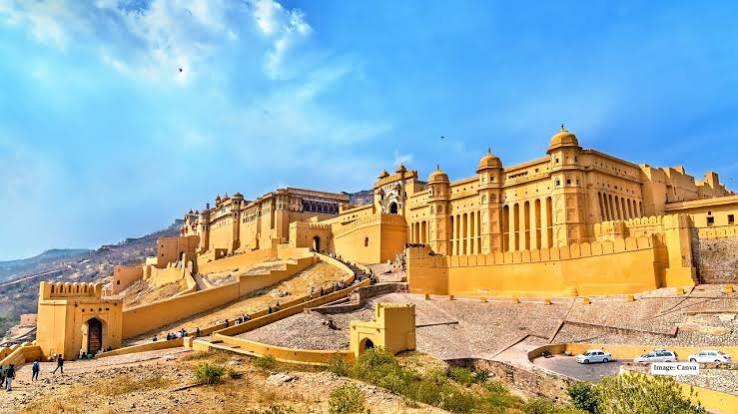
Amer Fort — A Symbol Of Rajput Bravery
Amer Fort, one of the best hill forts in India, lies around 11 kilometers from Jaipur.The fort, built predominantly of red sandstone and marble, has:
- Sheesh Mahal (Palace of Mirror)
- Ganesh Pol Diwan e Aam
- Diwan-e-Khas Courtyards of wonder Secret passages
The fort is a magnificent specimen of Rajput military architecture with a pinch of Mughal decorative touches.
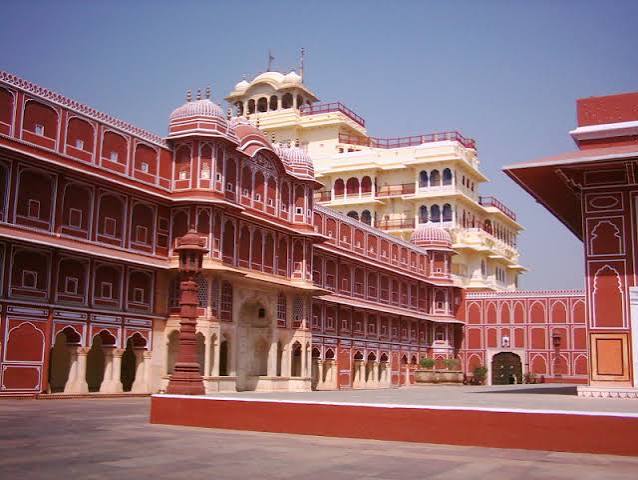
City Palace — The Heart of Jaipur
The City Palace is still one of the most spectacular royal homes in Jaipur.Members of the previous royal family live in some of the palace, although part of it has been made into a museum.
Visitors can admire:
- Royal Dress Weapons Paintings
- older manuscripts
- Beautiful courtyards Silver urns
Its famed Peacock Gate is among the most photographed sites in Jaipur.
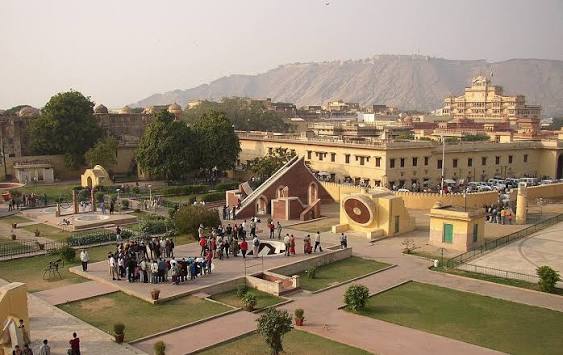
Jantar Mantar – Where Science Meets History
One of the biggest scientific achievements of Jaipur is the astronomical observatory, Jantar Mantar, built by Maharaja Sawai Jai Singh II.It hosts 19 gigantic astronomy instruments including the world’s largest stone sundial.
The observatory was used for:
- Measuring time
- Celestial object tracking
- Forecast eclipses
- Planetary motion watch
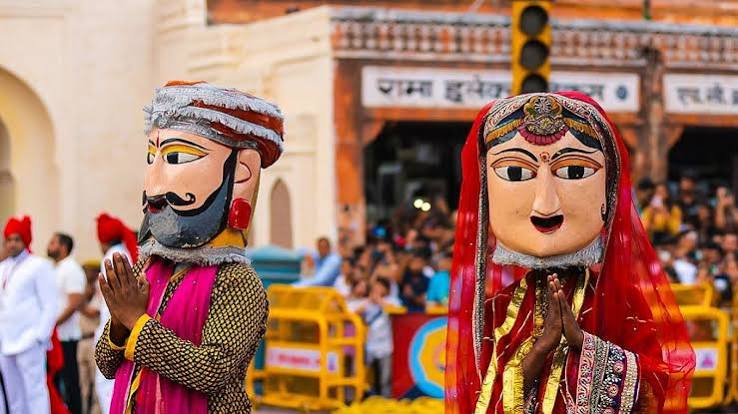
Today it is a UNESCO World Heritage.Rich Culture and Festivals Jaipur throbs with life throughout its festivals.Some of the city’s most prominent festivities are:
- Jaipur Literature Festival
- Gangaur Festival
- Teej Festival
- Diwali
- Makar Sankranti
- Elephant Festival
These festivities are a showcase of Rajasthan’s rich traditions, folk music, colourful dress and royal rituals.


