Empire 5,000 Years Ahead of Its Time
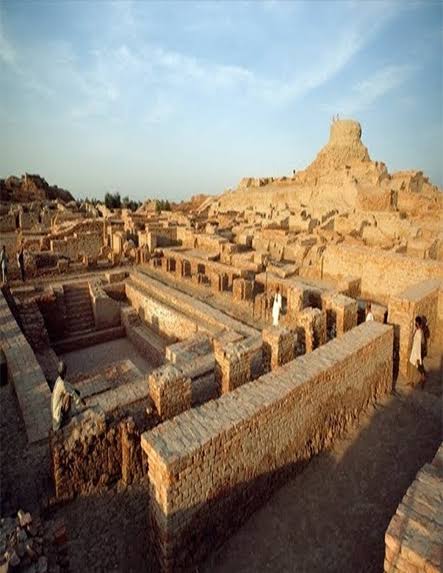
- A Civilization Still Stirring Modern Thought Imagine walking through a city nearly 5,000 years ago where the roads were perfectly straight and in grids, all the houses were built with bricks of the same size, almost every house was connected to a sophisticated drainage system, and merchants were trading with lands thousands of kilometers away.
- It may sound like a modern city, but that was the Harappan Civilization, also known as the Indus Valley Civilization, one of the earliest and most advanced urban civilizations in the history of mankind.
- Long before the pyramids of Egypt had completely transformed the ancient world and centuries before the Roman Empire had risen, the people of the Harappan Civilization had already mastered urban planning, engineering, trade, craftsmanship and civic administration. The cities were not built haphazardly but reveal a deliberate planning, an extraordinary organization and a sense of public life that still astounds archaeologists.
- But even after decades of digging and research, the Harappans remain one of the great mysteries of history. No king has ever been conclusively identified, no historical record explains the disappearance of such a prosperous civilization and their script has never been fully deciphered.
- Each new excavation raises new questions. Each artifact gives a piece of the puzzle historians are still trying to solve.
- In this in-depth guide, we take you through the intriguing world of the Harappans – from their discovery and emergence to their cities, culture, economy, innovations and the mystery that still surrounds their decline.
The Harappan Civilization was?
- The Harappan Civilization, often referred to as the Indus Valley Civilization (IVC) was one of the earliest Bronze Age civilizations of the world. It flourished mainly on the fertile plains of the river Indus and its tributaries, in what is today Pakistan and north western India.
- The civilization is named after Harappa, the first of its sites to be excavated. Historians had previously thought that India’s early history began much later than this. The discovery of Harappa and other ancient cities completely changed our understanding of the sub-continent’s past.
- Archaeologists have discovered more than 2,000 Harappan sites today, making it one of the largest ancient civilizations to date. Its geographical reach was even wider than that of Egypt and Mesopotamia at the same time.
- What sets the Harappans apart, however, is not the scale of their civilization but the sophistication of their urban life. They built cities on a planned basis, developed standardized systems of measurement, maintained vast trade networks and established a level of civic infrastructure that was not to be matched for centuries.
Why is Harappan Civilization so called?
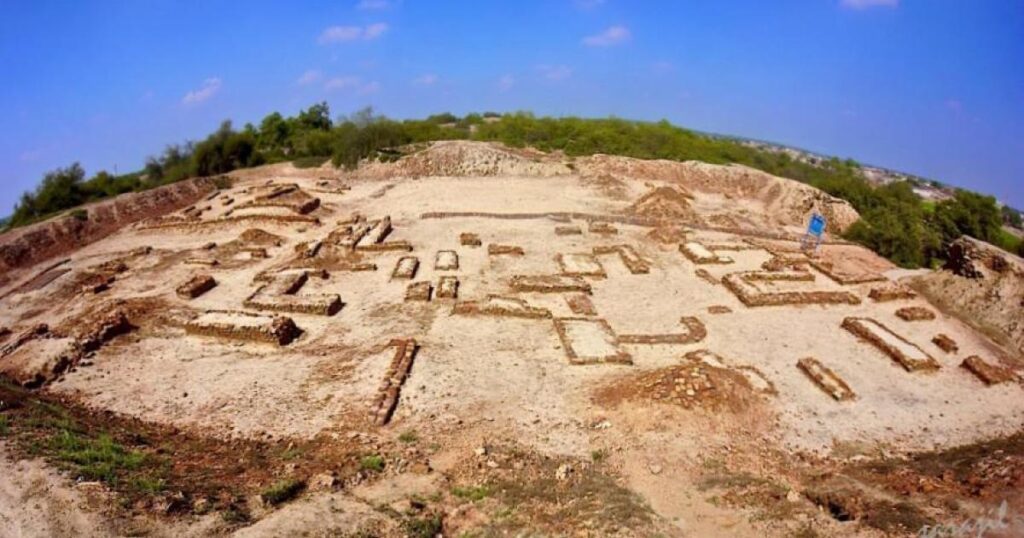
- The name ‘Harappan Civilization’ is derived from the ancient city of Harappa, located in present-day Punjab, Pakistan.
- Archaeologists began to dig this site up in the early twentieth century. They found a lost civilization unlike anything known before in South Asia. It was named after Harappa as it was the first major site that was examined.
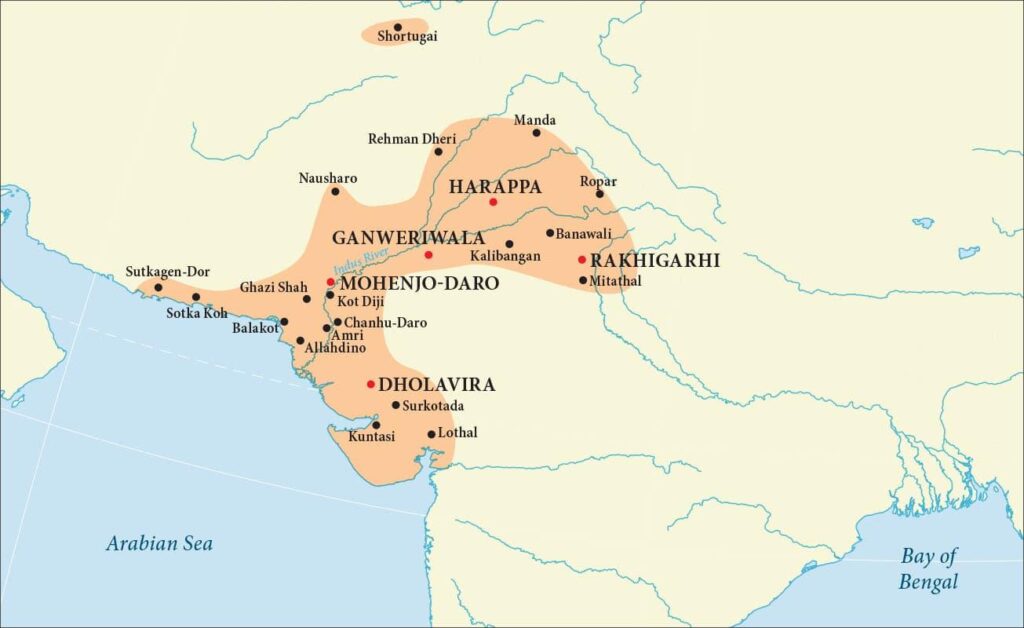
- Excavations later at Mohenjo-daro, Dholavira, Lothal, Kalibangan, Rakhigarhi, Banawali and many other sites showed that Harappa was simply part of a vast, interconnected civilization.
- Historians also refer to it as the Indus Valley Civilization, because many of these settlements emerged along the Indus River and its tributaries. Both terms refer to the same civilization and are used widely in historical studies.
The Discovery of a Lost Civilization
- One of the most fascinating aspects of the Harappan Civilization is that it remained buried under the earth for thousands of years.
- In the 19th century workers constructing railway lines were unknowingly using ancient baked bricks from Harappa as construction material. But no one at the time knew they were dismantling the remains of a civilization that flourished almost five thousand years earlier.
- The real importance of the site was realized in 1921 when the archaeologist Daya Ram Sahni made systematic excavations at Harappa.
- Another great city, Mohenjo-daro, was discovered by Rakhaldas Banerji in what is now Sindh, Pakistan within a year.
- These discoveries shook the archaeological world. Until then, scholars had thought India’s earliest civilizations had only appeared much later. Harappan finds pushed back the origins of urban life in the Indian subcontinent by more than a thousand years.
- Sir John Marshall, then Director-General of the Archaeological Survey of India, further excavated and established that Harappa and Mohenjo-daro were the sites of a great and highly organized civilization.
- Over the following decades, hundreds, and eventually thousands, more Harappan sites were found across India, Pakistan, and Afghanistan, revealing the true extent of this extraordinary culture.
Timeline of Harappan Civilization
- Like all great civilizations the Harappan world grew over many centuries. Its evolution is generally divided by historians into three distinct phases.
- Early Harappan period (ca. 3300-2600 BCE)
- This was the early period. Small farming villages slowly developed into organized towns. Communities started farming on a larger scale, creating pottery and regional trading.
- Though these settlements lacked the monumental planning of later cities, they set the stage for one of history’s most remarkable urban transformations.
- Mature Harappan Phase (c. 2600-1900 B.C.)
- This is the golden era of the civilization.
- Cities like Harappa, Mohenjo-daro, Dholavira, Lothal, Kalibangan and Rakhigarhi developed to a great extent. Roads were well thought out , drainage systems were very advanced , bricks were standardized and mass produced , and trade flourished locally and with the rest of the world .
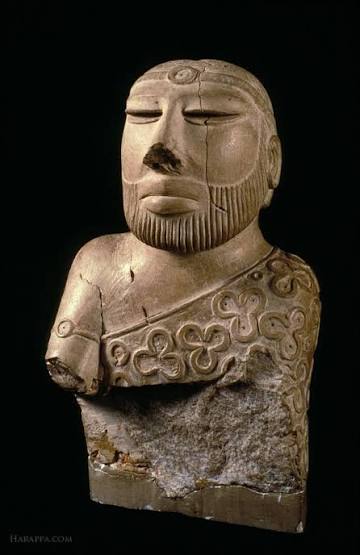
- This period is the source of most of the famous Harappan artifacts, such as the seals, statues, jewelry and Great Bath.
- Late Harappan Phase (ca. 1900–1300 bce)
- Many great cities went into decline after centuries of affluence.
- Urban populations declined, long-distance trade declined and a number of settlements were abandoned. Rather than disappearing suddenly, the civilization slowly changed into smaller regional cultures, bringing to a close one of the greatest urban traditions of the ancient world.
The Harappan Civilization’s Extensive Geography
- The greatest achievement of the Harappan Civilization was its widespread geographical extent.
- It extended over nearly 1.5 million square kilometers, covering present-day Pakistan, northwestern India and parts of Afghanistan.
- Major Harappan sites have been found in:
- Punjab Sindh Haryana Rajasthan Gujarat Jammu and Kashmir Uttar Pradesh Baluchistan Afghanistan
- This huge landmass made the Harappan Civilization larger than Ancient Egypt and Mesopotamia at the same time.
- The civilization flourished in several major rivers including the Indus , Ravi , Beas , Sutlej , Chenab and the Ghaggar-Hakra river system , which many scholars associate with the ancient Saraswati mentioned in later Indian traditions .
- These rivers provided fertile land, allowed agriculture to thrive, enabled trade, and permitted settlements to flourish for hundreds of years.
The Major Cities of the Harappan World
- The Harappan Civilization did not have one capital. Instead, it was a series of cities, each of them well-planned, with various economic, cultural and administrative functions.
- Harappa – The City That Gave Its Name to a Civilization
- Harappa is still one of the most important archaeological sites in South Asian history.
- The city was well-planned with impressive granaries, brick houses and a fortified citadel, revealing the remarkable organizational skills of the inhabitants.
- The discovery of Harappa was the beginning of a new chapter in the Indian archaeology and changed forever our understanding of ancient civilisation.
- Mohenjo-daro – The City Of Incredible Engineering
- Mohenjo-daro, or the “Mound of the Dead,” is possibly the most famous of the Harappan cities.
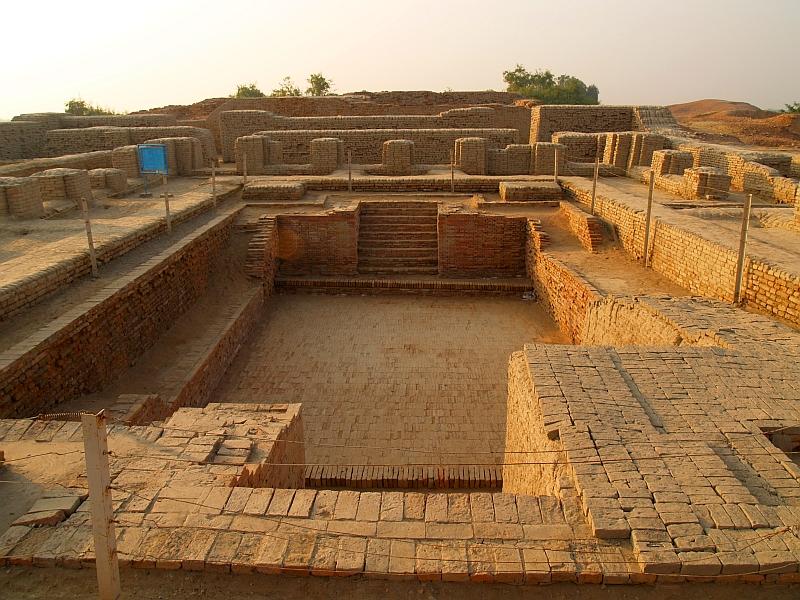
- The streets were in a perfect grid pattern, houses had private bathrooms and covered drainage systems ran under the roads.
- At the center of the city is the fabled Great Bath, one of the oldest known public waterworks in the world. Historians think it may have been used for religious or ceremonial reasons, but its exact function is uncertain.
- The engineering and sanitation of the city still impresses architects and archaeologists alike.


