E.V. Ramasamy Periyar: The Revolutionary Who Challenged India’s Social System
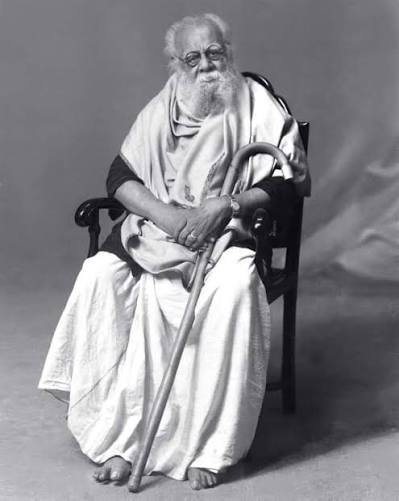
- “No society can move forward if people are afraid to challenge old beliefs.” This was the principle that shaped the life of “Erode Venkatappa Ramasamy”, more popularly known as “Periyar”—one of the most prominent, revered and controversial social reformers of modern Indian history.
- Some remember him as the ” Father of the Dravidian Movement” and a bold crusader for social justice. Some condemn his fiery attacks on religion and on traditional customs. However, one may disagree with his opinions, but his impact on Tamil Nadu’s society and politics cannot be ignored.
- For nearly five decades, Periyar fought against caste discrimination, for women’s rights, for rational thinking and for people to challenge behaviours they considered had grown unjust. His views revolutionised the political discourse in South India and continue to affect discussions on equality and social reform even today.
In this article we shall discuss the biography of E.V. Ramasamy Periyar, his achievements, his philosophy, the debates related to him and his legacy.
Who Was Periyar E.V. Ramasamy?
- Erode Venkatappa Ramasamy was born on ‘September 17, 1879’ at Erode in present-day Tamilnadu. He was born into a wealthy merchant family and did not attend college but worked in the family business in his youth.
- Unlike many of his contemporaries, Periyar was not influenced by the universities or elite institutions. But his education consisted in seeing the society around him. He was naturally inquisitive, and he would not accept any custom merely because it had existed for generations.
- The basis of his life’s work was his penchant for challenging social practices.
- Later people started calling him “Periyar”, a Tamil phrase meaning “The Great One” or “The Respected Elder.”
The Journey That Altered Everything
- Every great reformer gets his moment.For Periyar it arrived on his trip to Kashi (Varanasi) in the early 1900s.Like millions of worshippers, he journeyed to one of Hinduism’s holiest towns, anticipating spirituality and equality. Instead, he saw things that really troubled him. According to historical records, he was supposedly denied meals at a charitable dining hall because he was not a Brahmin.The event left a lasting impression.
- Later Periyar defined this event as the point when he questioned the social order legitimised in the guise of religion. It convinced him that discrimination on the basis of birth was one of the biggest barriers to justice in Indian society.
- From there on his life took a very different turn.Entering politics—and leaving it.
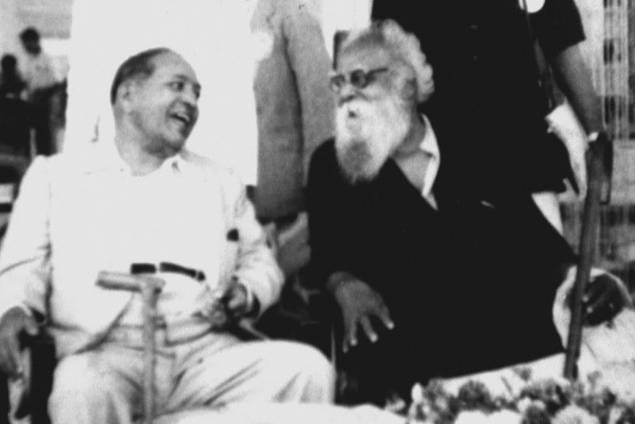
Periyar joined the Indian National Congress in 1919 wanting to assist to India’s freedom war.
- He was prominent in the efforts for khadi, prohibition and the abolition of untouchability. He was also the Chairman of Erode Municipality and was respected as a capable public leader.
- But with the passing years, Periyar grew more and more unsatisfied. He considered that social inequity in the Indian society needed equal attention, albeit political independence from the British control was necessary.
- In 1925, he resigned from the Congress as he felt that the issue of caste discrimination was not being properly handled.
The decision signalled the beginning of a new chapter, one that would define his legacy.
The Growth of the Self-Respect Movement
On leaving the Congress, Periyar launched the ‘Self-Respect Movement’, one of the most important social reform movements in South India.
Its message was simple yet it was revolutionary:
All deserve to be treated with dignity, not because of their caste, religion, wealth or gender but because they are human beings.
The movement called on individuals to:
- Oppose caste-based discrimination.
- Think rationally instead of following traditions blindly.
- Encourage girls’ education.- Promote inter-caste marriages.
- Child marriage and dowry are should be opposed.
- Abolish untouchability.
- Live with dignity and equality.
For thousands of common people, the Self-Respect Movement was the awakening of social consciousness.
The Hero of Vaikom
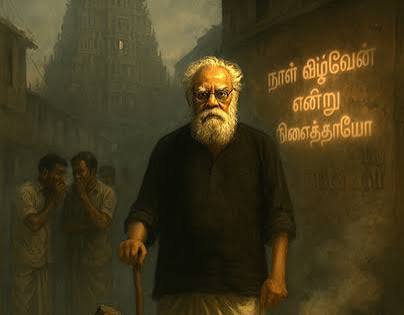
- One of Periyar’s most famous accomplishments was the “Vaikom Satyagraha (1924-1925) ” in present-day Kerala.At that time, people from oppressed communities were forbidden to walk on routes around the Vaikom Temple.
- Periyar took part in the non-violent agitation for equal rights for all. His involvement led to his imprisonment, but also earned him the title:
“VAIKOM VEERAR”— The Hero of Vaikom.
- The movement was a watershed moment in the history of the fight against caste discrimination in South India.
His Battle for Women’s Rights
Long before women’s empowerment became a national conversation, Periyar said, no society can grow while half its population is unequal.He felt that women should have equal rights with males in all walks of life.
He openly backed:
- Women’s education
- Property rights
- Re-marriage of Widows
- Divorce rights
- Freedom to pick their life partner
- Child marriage opposition
- To abolish dowry system
In the early twentieth century these concepts were quite radical and threatened deep ingrained social mores.
Rationalism: The Heart of His Philosophy
Perhaps the most distinctive feature of Periyar’s ideology was ‘rationalism’.He told people to rethink everything—even the ideas that had been around for generations.Periyar felt that traditions should be kept alive only if they were useful to the society. If a custom had to be challenged, however old it was, if it promoted inequity or injustice.His focus on reason over blind religion inspired generations of students, writers and social activists.
Campaign to discriminate against caste
- Periyar said caste was not a creation of nature but of civilisation.
- No child is born inferior or superior,” he declared.
- He spent his entire life fighting for equitable educational opportunities, fair representation in government posts, social justice programs and the total elimination of untouchability.
- Many of the social justice discussions that persist in Tamil Nadu today have their roots in Periyar’s initiatives.
Anti-Hindi agitation
In the late 1930s, schools in the Madras Presidency were made to teach Hindi compulsorily.Periyar had strenuously opposed the move.His was not an argument against the voluntary learning of Hindi. He felt that imposing one language on another was a threat to regional identity and linguistic diversity.His protests were a crucial turning point in the political history of Tamil Nadu and had a far-reaching impact on the state’s language policies.
The Beginning Dravidar Kazhagam
In 1944, Periyar converted the Justice Party into the “Dravidar Kazhagam (DK).”
The organization concentrated on:
- Social parity
- Rationality
- Empowerment for women
- Elimination of caste prejudice
- Safeguarding Dravidian Identity
By contrast with many other political parties, DK did not stand for election and remained a social reform movement.Ideological differences later led to the formation of another of Tamil Nadu’s major political parties, C.N. Annadurai’s Dravida Munnetra Kazhagam (DMK).
Why Periyar continues to be a controversial figure
Periyar is one of the most controversial individuals in history.
- His supporters praise him for confronting centuries-old societal inequities and for amplifying the voices of marginalised people.
- Critics have labelled some of his comments and his sharp criticism of religion, particularly Hindu traditions, inflammatory and extremely insulting to many believers.
- He advocated for a distinct Dravida Nadu and married Maniammai late in life, both of which are debated among historians.
- Periyar is one of the most discussed social reformers of India because of these conflicting views.
- Periyar’s Enduring Legacy
- Periyar died on 24 December 1973 at the age of 94.
- Over half a century later, his effect is still seen in Tamil Nadu.
- His ideas have influenced many political leaders, movements for social reform, and continue to inform debates on equality, caste, education and social justice.
- Now his birth date is celebrated as **Social Justice Day** in Tamil Nadu to mark his involvement in debates on social equality and reform.
- Periyar is considered a visionary or a radical, perhaps one of the most influential figures in contemporary Indian history.
- I don’t know what to do.
- E.V. Ramasamy Periyar was not just a political leader, he was a social reformer who made people think differently.
- His campaign against caste prejudice, his advocacy of women’s rights, promotion of rationality and desire for social equality changed the social fabric of Tamil Nadu.
- At the same time, his techniques, language and ideas on religion continue to be a matter of controversy and disagreement. To understand Periyar we must also understand his achievements and the disputes around his legacy.
History tends to remember those who dare to ask questions about the world they see. Periyar was certainly one, and his influence continues to be felt in talks about justice, equality and reform in India today.


