Taj Mahal History: The Complete Story Behind India’s Monument of Eternal Love
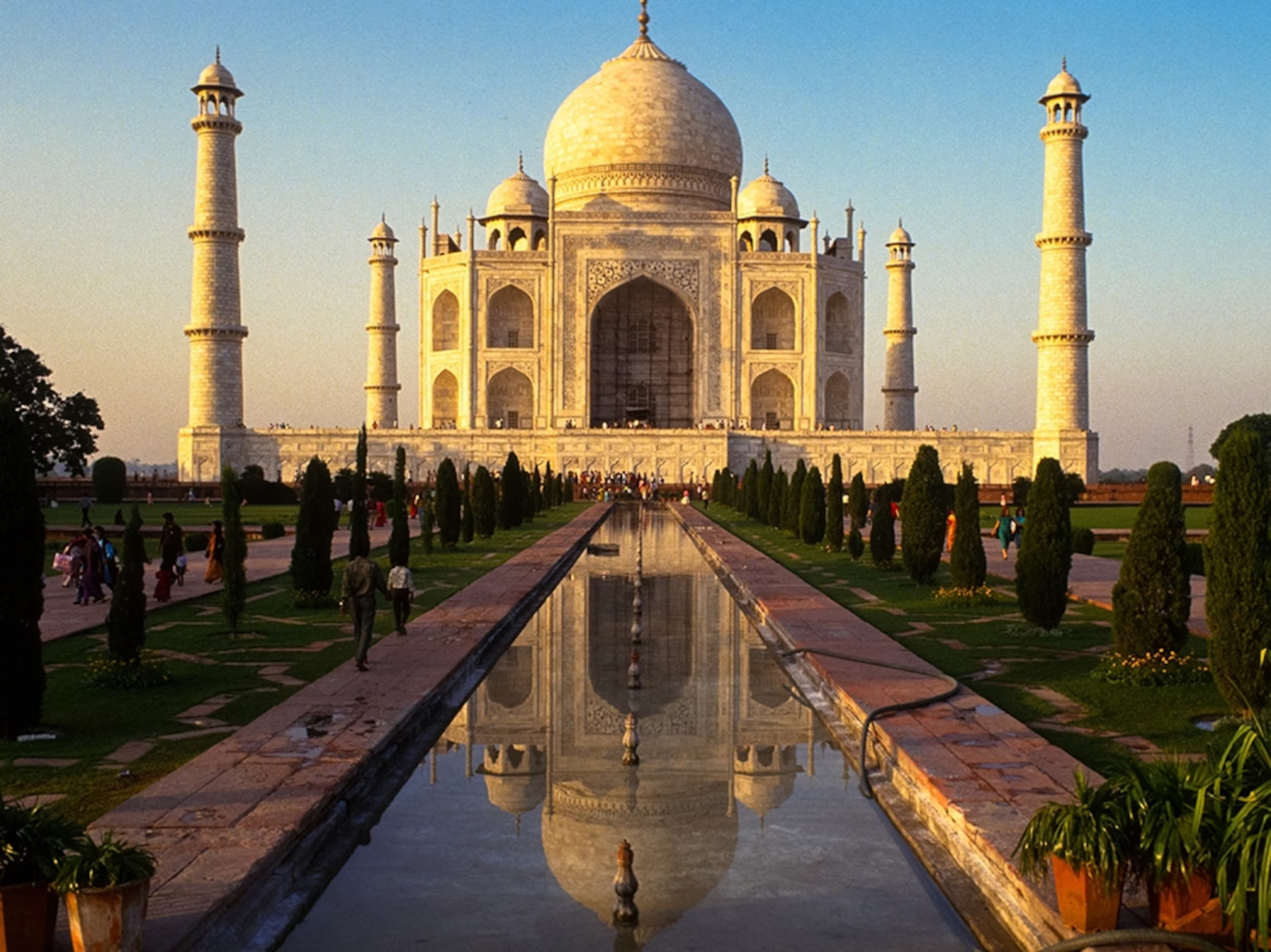
The Taj Mahal is one of the most beautiful building in the world and the most famous. The white marble mausoleum at Agra, India tourists has long been of interest to tourists, architects and artists. There is a lot more to the Taj Mahal than beauty. It is also called a “monument of love”. It was a wonderful example of engineering, architecture and cultural heritage.
The Taj Mahal is the most famous example of indo-islamic architecture. it was constructed in the golden era of mughal empire . People travel all over the world to see the beauty of Taj and to hear incredible story how it was built.
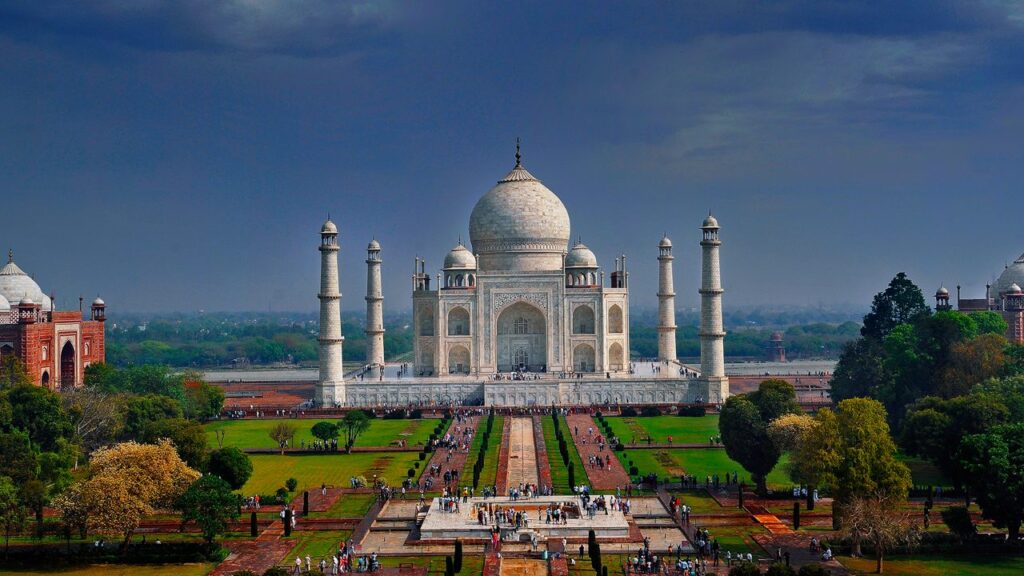
Historical background of The Taj Mahal
The taj mahal dates from 17th century,the time of shah jahan one of the greatest ruler of mighty mughal empire.
The mughal empire famous for its millitary power, strength,creative brilliance and heritage.
Architecture evolved to its highest pitch under Shah Jahan. Some of the most famous buildings in India are from his era.
But the motivation behind the Taj Mahal was extremely personal.
She was the cherished wife of Shah Jahan . In 1631 , she gave birth to their fourteenth child and died during a military campaign in the Deccan region . The empress’s death broke the emperor’s heart and changed the architectural history forever.
Shah Jahan wants to build a monument to her memory the world had never seen.
Mumtaz Mahal and Shah Jahan were whom?
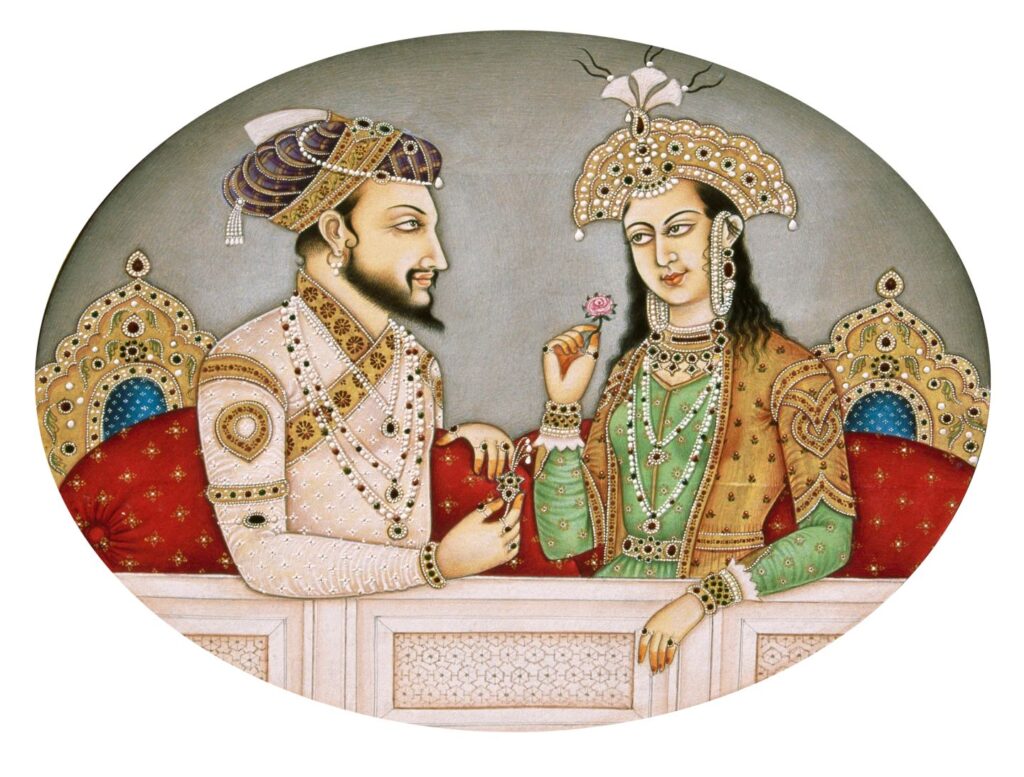
- Shah Jahan: Shah jahan was the grandson of great mughal ruler Akbar emperor Shah jahan reigned from 1628 to 1658. He is considered as one of the greatest patron of architecture of the history of India.
His period is typically regarded the golden age of Mughal architecture, with the creation of grand structures, gardens, forts and mosques.
- Mumtaz Mahal: Arjumand Banu Begum known as Mumtaz Mahal married Shah Jahan in 1612. She was his main confidant and advisor. In her chronicles she was described as an intelligent and empathetic woman who used her powers in the affairs of the court.
Her death in 1631 was a profound loss to Shah Jahan and led to the building of the Taj Mahal. Shah jahan wants to build a beautiful building for her beloved Mumtaj.
Why was the Taj Mahal build?
The Taj Mahal was built to hold the remains of Mumtaj.
There were many tomb before this but shah jahan wants to build an architectural marvel. Shah jahan had a vision of a building that would eclipse all previous attempts in beauty and craftmanship.
The monument was supposed to be a resting place but also a symbol of eternal love and a mirror of the paradise depicted in Islamic traditions.
Today, the Taj Mahal is renowned worldwide as one of the most famous symbols of love and devotion.
How the Taj mahal was constructed
The construction of taj mahal started in 1632 and continued for almost 22 years Taj mahal was completed in 1654.
Historical records indicate that over 20,000 workers, artists and craftsmen were engaged in the project.
Materials Used
The builders brought in materials from across Asia:
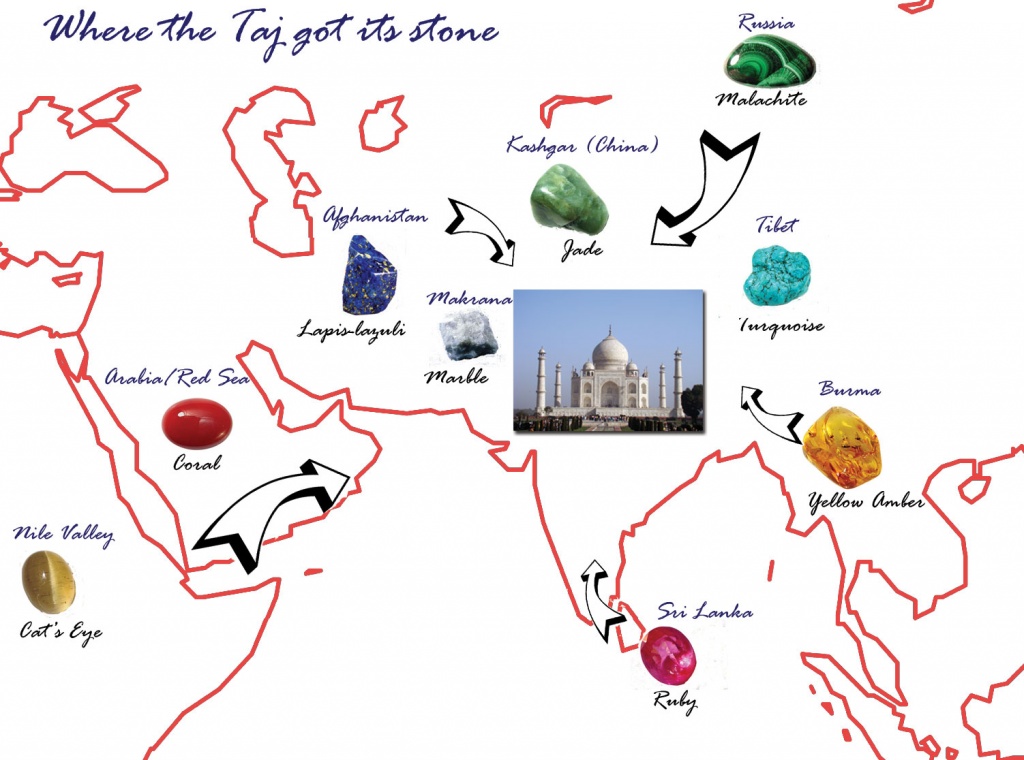
- Makrana, Rajasthan, white marble.
- Jasper of Punjab
- China jade
- Afghan lapis Tibetan turquoise
- Carnelian of Arabia
- Crystal from Central Asia
Legend has it that these items were carried by almost 1,000 elephants.
construction cost
The project cost millions of rupees, and historians say it was one of the costliest building exercises of that period, but the exact statistics are still being argued.
- Architecture & design
- The Taj Mahal considered as the most perfect example of Mughal Architecture.
- its design is a blend of:
- Architecture of Islamic world Persian architecture
- Turkish influences Indian handicraft
- The Great Dome
- The center dome dominates the whole construction and reaches up to 73 meters above the ground.
- The exquisite shape contributes heavily to the iconic look of the monument.
- The Quadruple Minarets
On each corner of the platform there is a minaret.
Interestingly, the minarets are somewhat leaning outwards in order to safeguard the main structure in an earthquake.
- Art in Stonework
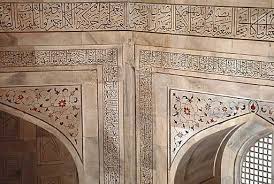
It is especially striking in its elaborate stone inlay work known as Pietra Dura.
Skilled craftsmen fashioned semi-precious stones into marble surfaces to create floral and geometric shapes.
Centuries of exposure and many of these ornaments are still visible today.
- Calligraphy
The monument has exquisite inscriptions of Quranic verses in black marble.
The text seems even from the ground because the designers used a sophisticated optical illusion.
- Timeline of the Taj Mahal
Year Event
- 1612 Shah Jahan marries Mumtaz
- 1631Death of Mumtaz
- 1632 Construction of Taj begins
- 1648 Main mausoleum was completed
- 1653Whole complex of Taj finished
- 1658 Deposition of Shah Jahan
- 1666 Death of Shah Jahan
- 1983 Inscription on the UNESCO World Heritage List
Interesting Facts of Taj Mahal
1. It Changes Color Throughout The Day
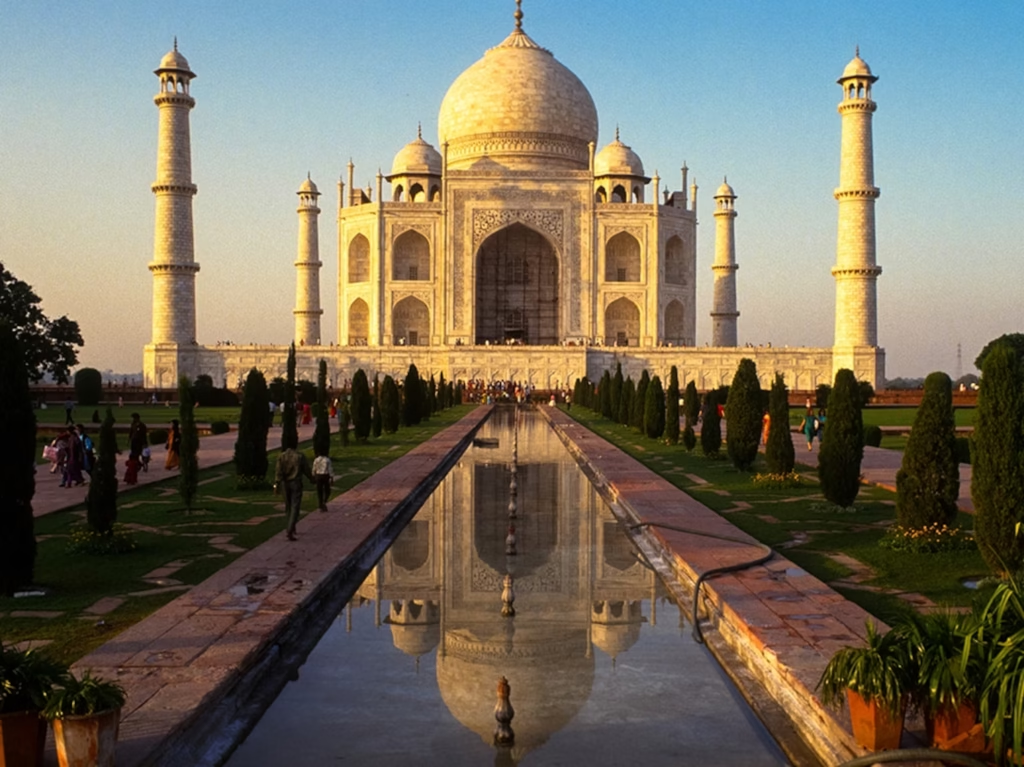
At sunrise the Taj Mahal looks pinkish, at day sparkling white and in the moonlight golden.
2. Symmetry Perfect
Nearly all parts of the monument are strictly symmetrical.
3. A UNESCO World Heritage Site
It was included in the UNESCO World Heritage Site list in 1983.
4. Millions of Visitors
Every year it attracts millions of domestic and foreign travelers.
5. One of the New Seven Wonders of the
The Taj Mahal was chosen as one of the New Seven Wonders of the World in a worldwide vote.
Legends & Myths
- The Black Taj Mahal
Shah Jahan, it is popularly believed, wanted to construct a Taj Mahal of black marble on the other bank of the Yamuna.
But historians have discovered scant evidence for this claim.
Legend of Craftsmen
Another popular legend is that Shah Jahan cut off the hands of workmen after completion.
There is no good historical evidence to support this allegation.
Cultural and historical relevance
- The Taj Mahal is not just a monument.
It represents:
Love and faithfulness
The Excellence Architecture
Mughal art accomplishment
The cultural legacy of India
World tourism
Its influence can be observed in literature, filmmaking, photography and art all across the world.
The monument also reflects the amazing amalgamation of several architectural traditions that was characteristic of the Mughal period.
‘Contemporary Issues and Preservation’
The Taj Mahal is beautiful but faces various risks.
- Pollution of the air:
Industrial pollutants and automobile pollution have caused the coloring of the white marble.
- Environmental Issues:
The long-term stability of the monument may be affected by changes in the environment of Yamuna River.
- Tourism Stress:
Constant maintenance and conservation are required because of the heavy visitor flow.
Government agencies and preservation organizations are still trying to protect the monument for future generations.
It is famed for its spectacular architecture, historical significance and relationship with eternal love.More than 3 centuries after the construction of the Taj Mahal continues to inspire wonder and admiration around the world. Its story is that of love and grief, of artistic genius and architectural grandeur. Built by Shah Jahan in memory of his wife Mumtaz Mahal, The structure has transcended its initial purpose to become an international emblem of beauty and cultural heritage.Whether as an architectural masterpiece, a historical landmark or a symbol of everlasting love, the Taj Mahal is still one of the greatest achievements of mankind. Its eternal elegance means that future generations will continue to wonder at its beauty and enjoy the amazing narrative behind its development.


